An “FIR” (First Information Report) and a “complaint” are two distinct legal documents used in the field of law and justice, each serving a different purpose and having specific characteristics.
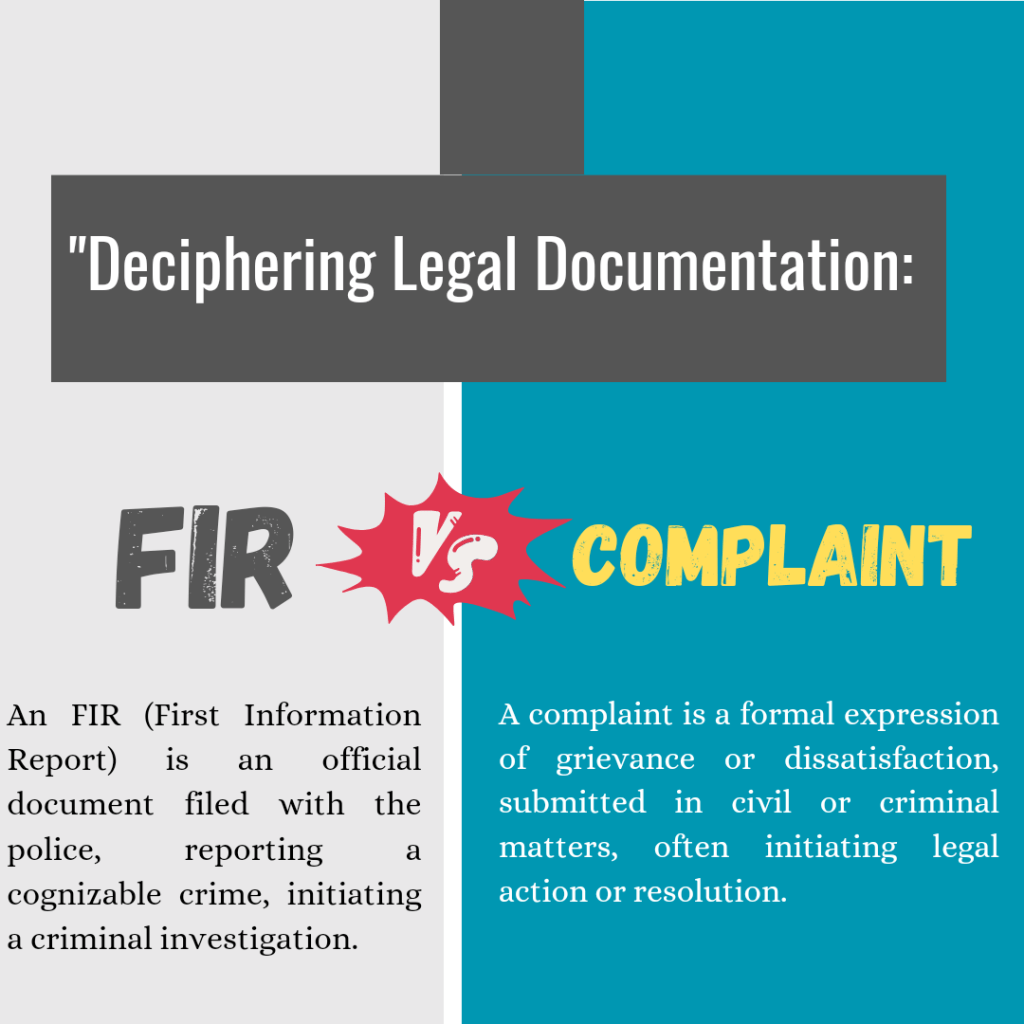
FIR (First Information Report):
An FIR is an official document used in criminal cases. It is typically the first step in the process of addressing criminal offenses. Here are its key characteristics
1. Criminal Offense Reporting: An FIR is used to report the commission of a cognizable offense. Cognizable offenses are those for which the police can take immediate action without the need for a court order.
2. Official Record: It is a formal, written record filed with the police. The information in the FIR is generally provided by the victim, a witness, or someone with knowledge of the crime.
3. Initiates Investigation: The filing of an FIR initiates a criminal investigation. The police are legally obligated to register an FIR for cognizable offenses and then proceed with the investigation.
4. Legal Significance: FIRs have legal weight and can be used as evidence in court proceedings.
Complaint:
A complaint, on the other hand, is a broader term and can refer to various legal documents in both civil and criminal matters. Here are its key characteristics:
1. Expressing Grievance: A complaint is a written or oral expression of grievance or dissatisfaction. It can relate to civil disputes, non-cognizable offenses, contractual matters, or any issue where legal intervention may be required.
2. Varied Context: Complaints can encompass a wide range of situations, from consumer complaints and civil lawsuits to complaints against a neighbor for noise disturbance.
3. May or May Not Lead to Legal Action: Filing a complaint does not necessarily result in an immediate legal action or investigation. The response to a complaint depends on the nature of the issue and applicable laws.
4. Civil or Criminal Context: Complaints can pertain to both civil and criminal matters, depending on the context. In civil cases, a complaint is the initial document that starts a lawsuit.
- Presumption of Death or Shall Presume: Understanding the Indian Evidence Act
- “Decoding the Enigmatic Hierarchy of Uttar Pradesh’s Brave Protectors: UP Police Ranks Unveiled”
- Unlocking the Power of Self-Improvement
- Unveiling the Historical Canvas: The Indian Evidence Act, 1872
- Understanding the Legal Framework: Code vs. Act
In essence, an FIR is specific to the reporting of criminal offenses, is an official document that triggers a criminal investigation, and has legal significance in criminal proceedings. On the other hand, a complaint is a more general term used to express grievances, and it can be related to various legal matters in both civil and criminal contexts. Understanding the distinction between the two is important in the legal field and for those preparing for legal exams or dealing with legal matters.
#LegalMatters#ComplaintsCorner#JusticeSeekers#FIRAlert#ReportIt#LegalInsights#SeekingJustice#FileAnFIR#ComplaintsHandled#LegalAdvice

 Advocate Tripathi (Blog)
Leave a reply to Anupam Cancel reply